
Cheque Register
The cheque register tracks every cheque you have written and every cheque you have received - amount, dates, bank, and what it was for. Cheques are money that has left one party but not yet reached the other, and this is where that gap is visible.
Menu path: Accounting > Reports > Cheque Register
URL: https://my.ososs.com/dashboard/reports/cheque-register
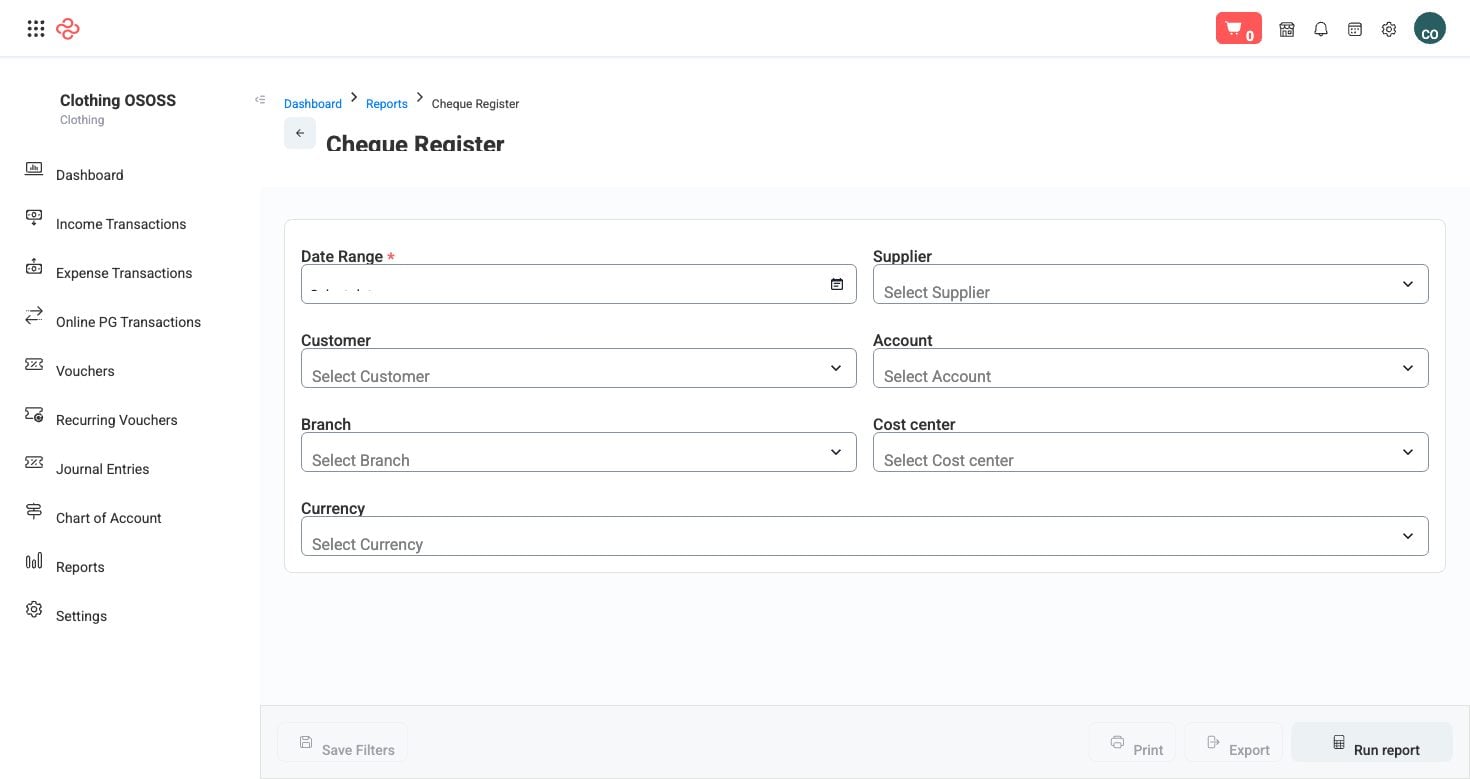
Screenshot from the live OSOSS Dashboard
What the output shows
| Column | What it means |
|---|---|
| Cheque number | The number printed on the cheque |
| Cheque type | Whether it is incoming or outgoing |
| Issue date | When it was written |
| Due date | The date it can be presented - the date that matters for planning |
| Original amount | The amount as written |
| Base amount | The value in your base currency |
| Currency code | The currency it was written in |
| Bank account | The account it is drawn on or paid into |
| Supplier / Customer | The other party |
| Linked transaction type / number | The invoice, bill or payment it settles |
| Branch name | Where it was handled |
| User name | Who recorded it |
| Notes | Anything recorded against it |
The due date is the operational field. A post-dated cheque is a commitment on a future date, and a register sorted by due date is a cash-flow forecast you did not have to build.
Reading it
- Sort by due date and read forward. Outgoing cheques falling due next week are cash you must have in the account; incoming ones are cash you can expect but should not spend twice.
- Filter by type. Outgoing cheques are a payment obligation; incoming ones are a collection risk until they clear.
- Check linked transaction on anything unclear. A cheque with no linked document is a payment nobody has matched to an invoice, and it will surface as an unexplained balance later.
- Compare the register against your bank position before committing to a large payment. A healthy bank balance with three large cheques due on Sunday is not a healthy bank balance.
Warning: A received cheque is not payment until it clears. Releasing goods against an uncleared cheque is a credit decision, so treat it as one - and follow up promptly on anything that has passed its due date without appearing in the bank.
Tip: Record the due date exactly as agreed, including post-dated arrangements. The register is only a forecast if the dates in it are real.
Related pages
- Cash Flow - the wider cash picture
- Account Transactions - reconciling the bank account
- Incomes and Expenses - where cheque payments are recorded