
Balance Sheet
The balance sheet is a snapshot: what the business owns, what it owes, and what is left over for the owners, as at one date. Where profit and loss covers a period, this covers a moment.
Menu path: Accounting > Reports > Balance Sheet
URL: https://my.ososs.com/dashboard/reports/balance-sheet
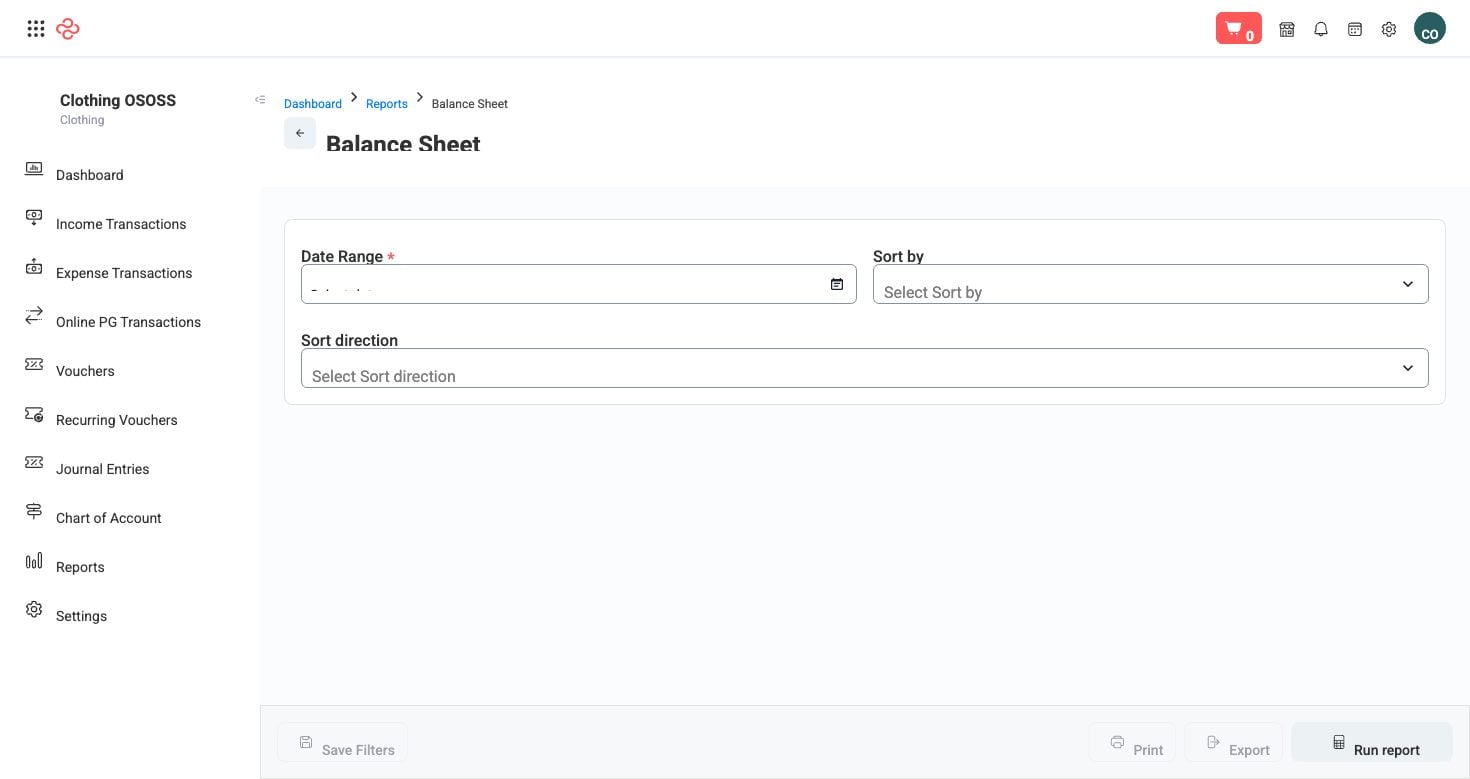
Screenshot from the live OSOSS Dashboard
How it is built
Accounts classified as assets, liabilities or equity in your chart of accounts are grouped and totalled as at the date you choose. The classification on each account is what puts it here rather than on the profit and loss statement, so a misclassified account quietly distorts both.
| Section | What it holds |
|---|---|
| Assets | Bank and cash accounts, customer balances owed to you, inventory value, fixed assets |
| Liabilities | Supplier balances you owe, tax payable, loans, other creditors |
| Equity | Capital, retained earnings, and the current period's result |
Assets must equal liabilities plus equity. That identity is what the report is testing, and OSOSS maintains it by posting in balanced pairs.
Reading it
- Choose the date. Month end and year end are the two that matter; a mid-month balance sheet is rarely comparable to anything.
- Sort by account number or by last activity, ascending or descending, to bring the accounts that moved to the top.
- Check inventory against your stock valuation, and customer balances against Aged Receivables. Both should agree; a gap means a document posted to the wrong account.
- Compare the same date across months. A balance sheet in isolation says little; the same date three months running shows whether cash, stock and debt are moving in the direction you intended.
Warning: Inventory value here is only as accurate as your last stock count. If the shelf and the system disagree, this statement is carrying the difference as an asset you do not have.
Note: The current period's profit appears in equity, so an unposted or draft-heavy month shows a smaller result here as well as on the profit and loss statement.
Related pages
- Profit and Loss - performance over a period
- Trial Balance - the account-level detail
- Fiscal Years - closing a year and carrying equity forward